

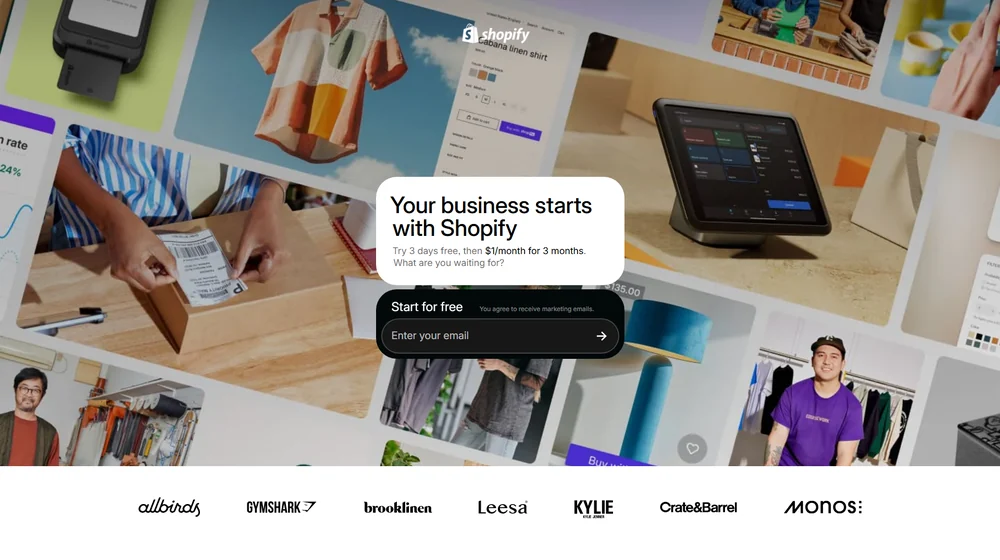
Shopify stands as the gold standard in SaaS e-commerce platforms through 2025, blending best-in-class online store building, robust multi-channel selling, and built-in AI tools tailored for entrepreneurs and growing brands. With transparent, scalable plans and an ecosystem of integrations, Shopify is engineered to help SMBs and enterprises build, manage, and scale their digital commerce operations in one unified workflow.
From Launch to 2026: Shopify’s Evolution
- 2006: Shopify launches as a simple online store SaaS for small merchants.
- 2013–2018: Expands core platform, mobile POS, and app ecosystem, becoming market leader for SMB e-commerce.
- 2020–2022: Scales global payments, adds omnichannel selling, enterprise APIs, and customizable checkout.
- 2024: Launch of advanced AI assistant (Sidekick), improved checkout (conversion ↑15%), and deeper integration with key social/marketplace channels.
- 2025: Continues as the all-in-one commerce SaaS for sellers at any growth stage, from startup to enterprise—adding more AI, automation, and sales channels.
Key Features
- Store Builder: Intuitive drag-and-drop website builder with hundreds of customizable themes, no coding required.
- AI Tools: Built-in AI Sidekick assistant offers store setup help, writing, analytics, and guidance for scaling sales.
- Optimized Checkout: Proven conversion lift (up to 15%) with accelerated payment options (Shop Pay, Apple Pay, PayPal, more).
- Multi-Channel Sales: Easily sell across web, mobile, social (Instagram, TikTok, YouTube), Amazon, brick-and-mortar, and pop-ups.
- POS & Retail: All-in-one retail and inventory, powerful mobile/mobile POS app, and hardware integration.
- Payments: Secure, in-house Shopify Payments and support for all major gateways.
- Marketing & SEO: Email campaigns, promo tools, built-in SEO, third-party ads integrations.
- Extensibility: 8,000+ official app integrations for marketing, reporting, fulfillment, B2B, and more.
- Analytics & Insights: Real-time dashboard, prebuilt reports, detailed analytics, and business recommendations.
- Enterprise Features: Shopify Plus tier unlocks headless commerce, advanced APIs, high-volume support, and custom workflows.


Workflow & UX
- Fast onboarding—launch a fully branded store in hours, not weeks.
- Unified dashboard for order processing, inventory, customer management, and marketing automations.
- Mobile app covers all basics: new order alerts, fulfillment, customer chat, analytics, and POS.
- Sidekick AI assistant makes common tasks (product listing, content, settings) faster—especially for first-time store owners.
- Designer themes can be swapped or customized at any stage without downtime.
- Checkout is auto-optimized; conversion best practices are continuously A/B tested at the platform level.
Shopify Pricing
| Plan | Core Features | Pricing |
|---|---|---|
| Basic | Full online store, POS Lite, 2 staff, 24/7 support, standard checkout | $39/mo (or as low as $1/mo for first 3 months; 3-day free trial) |
| Shopify | All Basic features plus 5 staff, enhanced analytics, lower fees | $105/mo |
| Advanced | 15 staff, advanced reporting, third-party calculated shipping rates | $399/mo |
| Plus | Enterprise-level features, automation, dedicated support, API access | Custom pricing (typically starts at $2,000/mo) |
Shopify vs Competitors
| Shopify | Wix | WooCommerce | BigCommerce | |
|---|---|---|---|---|
| Store Builder | ✓ (intuitive, robust) | ✓ | ☑︎ (plugin for WordPress) | ✓ |
| Checkout Conversion | Industry-best (15%+) | Standard | User-dependent | High |
| Built-in AI | Sidekick Assistant | Basic AI text/image | No (plugin needed) | Limited |
| POS Integration | ✓ (premium, seamless) | Limited | Third-party | ✓ |
| Apps/Extensibility | 8,000+ | 500+ | Thousands (plugin) | 1,100+ |
| Enterprise Plan | Shopify Plus | – | – | BigCommerce Enterprise |
| Support | 24/7 chat, phone | Email/chat | Community/hosted | 24/7 |
| Pricing | $1–399/mo +14-day free | $17–59/mo | Free + hosting | $39–399/mo |
Pro Tip: Power-users and growing SMBs unlock Shopify’s true value by leveraging Sidekick AI, app integrations, and experimenting with sales channel automation. Shopify scales as you do—migrating from startup to enterprise is seamless within the platform.

Integrations & Ecosystem
- One-click integration with Facebook, Instagram, TikTok, Google, Amazon Marketplace, and more.
- Access to 8,000+ Apps in the Shopify App Store for marketing, shipping, accounting, loyalty, and custom workflows.
- Advanced API access (Shopify Plus) for ERP, CRM, and enterprise integrations.
- Native partner solutions for payments, fulfillment, tax automation, and headless commerce.
Pros & Cons
| Pros | Cons |
|---|---|
|
|
Final Thoughts
As of 2025, Shopify continues to outpace competitors by offering a powerful platform that grows with your business. Whether you’re launching your first store or elevating an established brand, Shopify’s unmatched conversion, AI tools, and global integrations make it the go-to SaaS for SMB and enterprise commerce. Transparent pricing, rapid deployment, and 24/7 support further cement its leadership.
Shopify FAQ
Yes, it meets GDPR standards and supports HIPAA via a signed BAA on eligible plans.
Yes, white-label portals support your domain, favicon, and brand visuals.
Ideal for consultants, service firms, and SMBs needing streamlined collaboration.
No—integrates with both. Stripe powers payments; QuickBooks handles accounting.
All plans include chat/email; premium tiers add onboarding and 1:1 setup help.