

In 2026, as digital threats grow in scale and complexity, Norton has become synonymous with AI-powered cybersecurity, serving businesses of all sizes with solutions that simplify protection and empower entrepreneurs and IT teams alike.
From Launch to 2026: Norton’s Evolution Timeline
- 2020: Expanded from consumer antivirus to all-in-one cloud security platform for SMBs and entrepreneurs.
- 2022: Integrated advanced AI threat intelligence, automating real-time threat detection and response.
- 2024: Rolled out Zero Trust controls, device-agnostic privacy layers, and automated compliance modules.
- 2026 (projected): Norton is positioned as a holistic SaaS cybersecurity suite—combining automation, team management, unified dashboards, and 24/7 response to meet evolving enterprise-grade needs at SMB pricing.
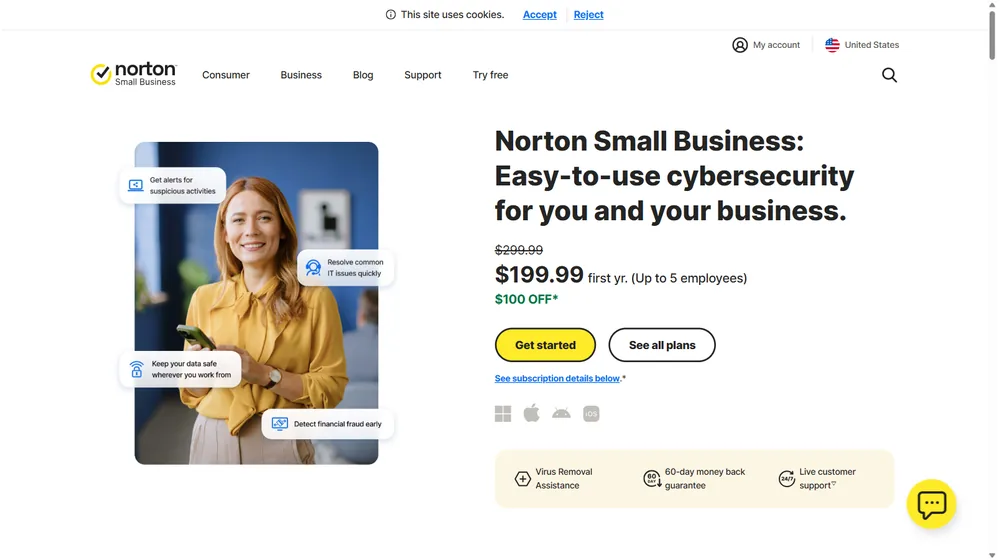
Key Features
- AI-Based Threat Detection: Automated malware, phishing, and ransomware analysis across endpoints, email, and cloud apps.
- Real-Time Endpoint Protection: Defends workstations, servers, and BYOD devices—without manual rule creation.
- Zero Trust Access Management: Enforces granular team/user permissions and device hygiene policies.
- Integrated VPN & Privacy Suite: Built-in encrypted browsing, tracker blocking, and identity theft remediation.
- Compliance Automation: Streamlines GDPR, HIPAA, SOC 2, and PCI-DSS requirements with audit-ready tooling.
- Unified Admin Dashboard: Centralizes alerts, compliance, and settings across all locations and endpoints.
- Automated Backup & Recovery: Versioning and restoration for files and databases with RPO-focused workflows.
- 24/7 Threat Response: Expert support and rapid incident escalation, no premium required.
Workflow & User Experience
- Setup is cloud-first—no hardware or scripting required; users are onboarded with guided wizards.
- Role-based dashboards give owners, IT managers, and non-technical staff tailored visibility and controls.
- Mobile experience mirrors desktop security, ensuring admins can respond to critical events from anywhere.
- Notifications and automated reports reduce alert fatigue and focus on actionable insights.
- Multi-tenant support allows agencies/IT consultants to manage client organizations in one pane of glass.
Norton Pricing
| Plan | Key Features | Pricing |
|---|---|---|
| Core | Endpoint protection, VPN, single admin, AI threat detection | $19.99/mo (5 users) |
| Team | Multi-user dashboard, privacy suite, compliance, automated backup | $39.99/mo (15 users) |
| Business | Zero Trust, integrations, audit toolkit, priority support | $69.99/mo (50 users) |
| Enterprise | Fully custom, unlimited endpoints, API, account manager | Custom Quote |
Norton vs. Competitors
| Norton | McAfee | Bitdefender | CrowdStrike | |
|---|---|---|---|---|
| AI Threat Detection | Yes | Limited | Yes | Advanced |
| Zero Trust Access | Included | Extra | No | Advanced |
| Compliance Automation | Yes | No | Partial | Yes (Enterprise) |
| Unified Dashboard | Yes | No | No | Yes |
| Pricing (Entry) | $19.99/mo | $29.99/mo | $25/mo | $59.99/mo |
| Best For | SMBs, agencies | Consumers, SMB | Tech-savvy SMB | Enterprise |
Pro Tip: For agencies or consultants seeking central oversight, leverage Norton’s multi-client dashboard for efficient portfolio management.

Integrations
- QuickBooks Online and Xero (reporting, billing sync)
- Slack and Microsoft Teams (alerts, security workflow)
- Google Workspace, Microsoft 365 (user, device, apps)
- Zapier and public API for custom automations
- Stripe (payments, billing continuity)
Pros & Cons
| Pros | Cons |
|---|---|
|
|
Final Thoughts
Norton has cemented its reputation as the go-to cybersecurity SaaS for SMB growth, blending advanced automation, flexible integrations, and strong support. With transparent pricing and a sustained investment in AI, it balances ease-of-use and depth—making it a wise choice for founders, agencies, and fast-scaling teams seeking multi-layered protection that simply works.

Norton FAQ
Yes, it meets GDPR standards and supports HIPAA via a signed BAA on eligible plans.


Yes, white-label portals support your domain, favicon, and brand visuals.
Ideal for consultants, service firms, and SMBs needing streamlined collaboration.
No—integrates with both. Stripe powers payments; QuickBooks handles accounting.
All plans include chat/email; premium tiers add onboarding and 1:1 setup help.
This post may contain affiliate links and we may earn commissions. Learn more in our disclosure.