

Few platforms have stood the test of time for SMB email marketing like Aweber. As SaaS competition intensifies through 2026, Aweber positions itself as a powerfully simple solution for entrepreneurs seeking professional automation, commerce, and list growth—without the complexity or high costs of bigger suites.
From Launch to 2026: Aweber’s Product Evolution
- 1998–2020s: Aweber pioneers SMB email newsletters, opt-in forms, and bulk sending with a focus on list-building best practices and deliverability.
- 2021–2023: Rapid feature expansion—AI-powered drafting, visual automation, and built-in landing pages—accelerates onboarding for non-marketers.
- 2024–2026 (Roadmap): Focus on affordable automation, template-driven campaigns, and commerce integrations, positioning Aweber as the most approachable all-in-one email solution for small teams and solopreneurs.
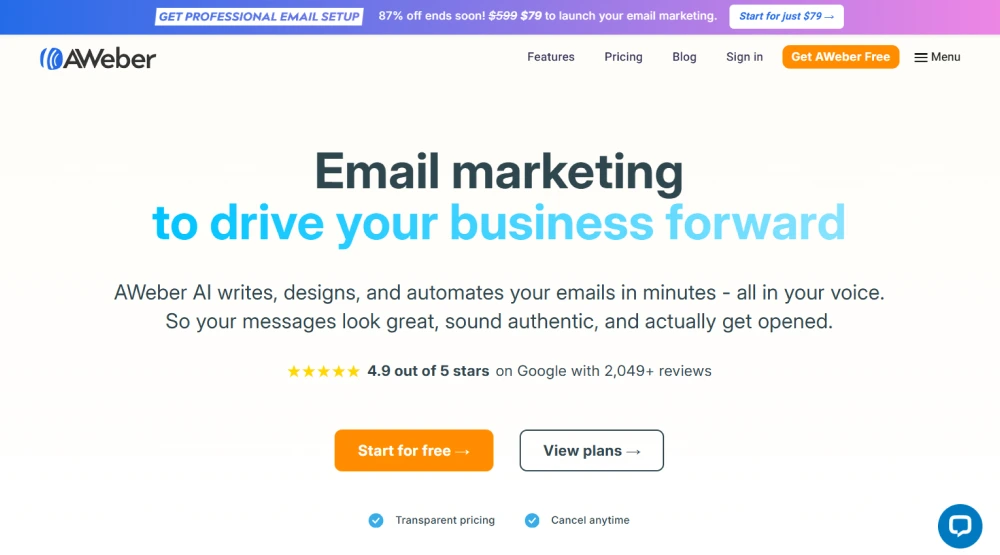
Key Features by Capability
- Email Marketing Automation: Visual campaign builder, triggered sequences, instant engagement (incl. abandoned cart, upsell, cross-sell).
- List Growth: High-converting sign-up forms, link-in-bio, and customizable landing pages—template-driven, mobile-optimized.
- AI Writing Assistant: Content and subject line optimization feature to accelerate campaign creation, even for non-experts.
- E-commerce Tools: Accept payments in 100+ currencies, sell subscriptions/products via Stripe, with simple landing page storefronts.
- Personalization: Segmentation, dynamic content, and behavior targeting—improves open/click rates without manual segmentation effort.
- Web Push Notifications: Reach audiences beyond email—expand messaging touchpoints from a unified dashboard.
- Performance Analytics: Real-time reporting on campaign metrics, list health, automation journeys, and purchase events.
- Integrations & API: 750+ apps (e.g., Shopify, WordPress, Zapier, Facebook, PayPal), developer API, free onboarding migration.


Workflow & UX
- Quick-start wizard for list, form, and campaign setup—perfect for SMBs with limited marketing infrastructure.
- Drag-and-drop template editing, responsive previews, and in-app AI for copy generation and optimization.
- Central dashboard for contacts, broadcasts, automation logic, and real-time insights.
- Integrated checkout and membership page creator—no coding or third-party site builders needed.
Aweber Pricing
| Plan | Key Features | Pricing |
|---|---|---|
| Free | 500 subscribers, simple automation, basic templates | $0/month |
| Lite | Up to 1,000 subs, advanced forms, campaign analytics | From $12.50/mo |
| Plus | E-commerce, full automation, split-testing, remove branding | From $20/mo |
| Unlimited | Custom features, high-volume sending, white-glove support | Custom Quote |
Aweber vs. Top Competitors
| Aweber | Mailchimp | ConvertKit | Constant Contact | |
|---|---|---|---|---|
| Price (Entry) | $0/mo | $0/mo | $0/mo | $12/mo |
| E-commerce | Built-in | Advanced (Paywall) | No native | Basic support |
| Automation | Yes (visual + AI) | Yes (advanced in higher plans) | Yes | Yes |
| Migration | Free concierge | Self-service | Self-service | Paid support |
| Support | 24/7 human | Limited hours | Email only | Phone, limited |
| Integrations | 750+ | 300+ | 100+ | 200+ |
| White Label | No | No | No | No |
Pro Tip: For small teams, choosing a platform with built-in automation and integrated commerce—like Aweber—shrinks setup cost, tech stack bloat, and time-to-launch compared to enterprise marketing clouds.

Integrations
- E-commerce: Stripe, PayPal, WooCommerce, Shopify
- Website & Content: WordPress, Zapier, Facebook, Instagram, YouTube
- CRM & Others: 750+ with direct API, plus free migration onboarding
Pros & Cons
| Pros | Cons |
|---|---|
|
|
Final Thoughts
If your priority is launching, nurturing, and growing an audience with minimal setup, Aweber is purpose-built for convenience and clear ROI. It remains a leader for SMBs who value deliverability, approachable automation, and responsive support—all at a predictable price.
Aweber FAQ
Yes, it meets GDPR standards and supports HIPAA via a signed BAA on eligible plans.
Yes, white-label portals support your domain, favicon, and brand visuals.
Ideal for consultants, service firms, and SMBs needing streamlined collaboration.
No—integrates with both. Stripe powers payments; QuickBooks handles accounting.
All plans include chat/email; premium tiers add onboarding and 1:1 setup help.