

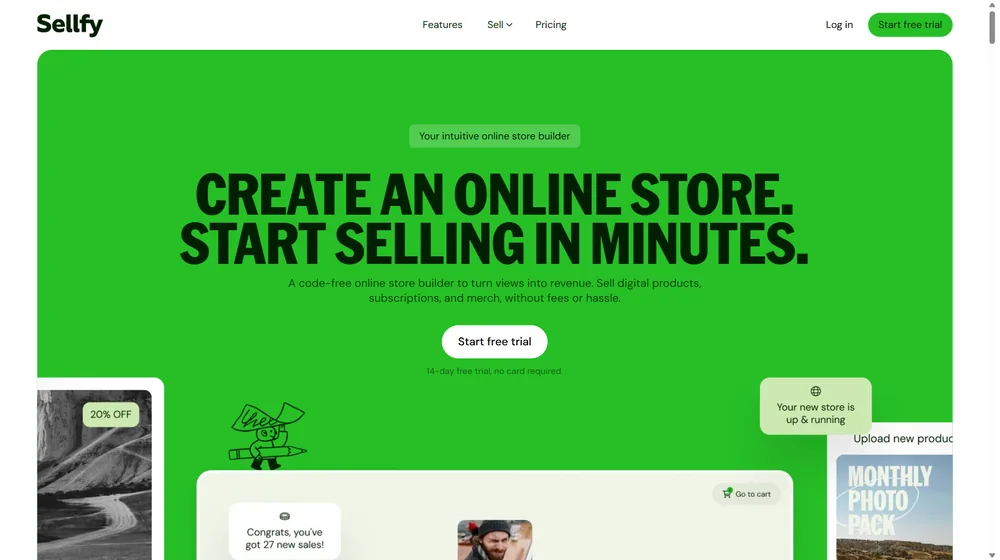
Sellfy is a modern SaaS platform designed to let creators, entrepreneurs, and small businesses launch an online store in under 10 minutes, with no coding or design headaches. In 2026, Sellfy stands out as an all-in-one tool for digital product sales and print-on-demand, purposely built for non-technical users seeking speed and simplicity.
From Launch to 2026: Sellfy’s Product Timeline
- 2011: Sellfy launches, focused on digital file delivery—enabling creators to sell directly to their audience.
- 2017–2019: Expands to localize checkout, add analytics, and improve store templates for personal branding.
- 2020–2023: Adds robust print-on-demand, subscriptions, upselling, and built-in email marketing. Growth accelerates with over 75,000 creators onboard.
- 2024–2026: Sellfy streamlines onboarding, strengthens affiliate tools, boosts automation, and invests in round-the-clock support. Platform positions as the go-to ecommerce engine for digital sellers and new SMBs, with a focus on frictionless launch and zero hidden costs.
Key Features
- Lightning-Fast Store Setup: Launch a branded store in minutes with zero development or design skills required.
- Digital, Print-on-Demand & Subscriptions: Sell downloads, online products, merchandise, and recurring subscription services side by side.
- Zero Transaction Fees: Simple, transparent subscription pricing with no hidden or per-transaction charges.
- Customizable Storefronts: Edit templates, images, and colors to align the storefront with your brand identity.
- Built-In Marketing: Run email campaigns, offer upsells and discounts, and abandon cart recovery—all from the dashboard.
- 24/7 Customer Support: Dedicated assistance available around the clock, no matter the tier.
- Affiliate & Upsell Tools: Advanced affiliate management and product upsell features to boost sales channels.


Workflow & User Experience
- Onboarding: Streamlined guided setup—just add products and customize your store, then go live.
- Product Management: Drag-and-drop uploads for digital goods, with inventory options for physical/print-on-demand items.
- Branding: Visual editor for store personalization; no coding needed.
- Marketing: Launch broadcast emails, set coupon codes, configure upsell flows, and manage affiliates from a unified admin UI.
- Dashboard: Real-time analytics for sales, audience, and revenue, in an intuitive no-clutter environment.
Sellfy Pricing
| Plan | Key Features | Pricing (est.) |
|---|---|---|
| Starter | Unlimited products, digital & print-on-demand support, no transaction fees | $29/mo (billed annually) |
| Business | Product upselling, abandoned cart, affiliate marketing, priority support | $79/mo (billed annually) |
| Premium | Multiple stores, higher bandwidth, dedicated success manager | $159/mo (billed annually) |
Sellfy vs Competitors
| Platform | Core Focus | Transaction Fees | Design Flexibility | Marketing Tools |
|---|---|---|---|---|
| Sellfy | Digital, Print-on-Demand, Subscriptions | None | Moderate (no-code templates) | Built-in: email, upsell, affiliates |
| Shopify | Physical, Digital, POS | 2–3% + app fees | Extensive (advanced design, custom code) | App ecosystem (extra cost) |
| Gumroad | Digital Products | 8.5% + 30¢ per sale | Minimal | Built-in emails, basic analytics |
| Etsy | Handmade, Vintage, Digital | 6.5% + listing fees | Low (Etsy template only) | Basic (feature limitations on free tier) |
Pro Tip: For non-technical creators or SMBs launching digital products fast, Sellfy delivers instant value, eliminating the complexity found in most ecommerce platforms.

Integrations
- Direct integration with payment gateways (PayPal, Stripe)
- Embed option for products/storefront on existing websites (WordPress, custom domains)
- Print-on-demand fulfillment partners (for merchandise)
- Zapier and third-party tools (for advanced automations, email, ads, etc.)
Pros & Cons
| Pros | Cons |
|---|---|
|
|
Final Thoughts
For entrepreneurs and digital creators who want to sell quickly—with no coding, zero hidden fees, and all critical marketing features—Sellfy remains a clear leader in 2026. While there are bigger platforms for larger stores, Sellfy is laser-focused on helping SMBs and individual creators start, market, and grow efficiently. Its value proposition: launch a digital business in minutes, not weeks, with unrivaled simplicity.
Sellfy FAQ
Yes, Sellfy complies with GDPR out-of-the-box; HIPAA support may be available for eligible business plans.
Yes, stores can use a custom domain as part of professional branding. DNS setup required.
Ideal for digital creators, coaches, freelancers, and small businesses needing fast, code-free storefronts.
Not completely—Sellfy excels for fast digital stores and simplicity; Shopify is suited for large-scale custom commerce, Gumroad for minimalism.
All tiers offer 24/7 live chat and email support; business and premium plans gain priority access and setup help.